
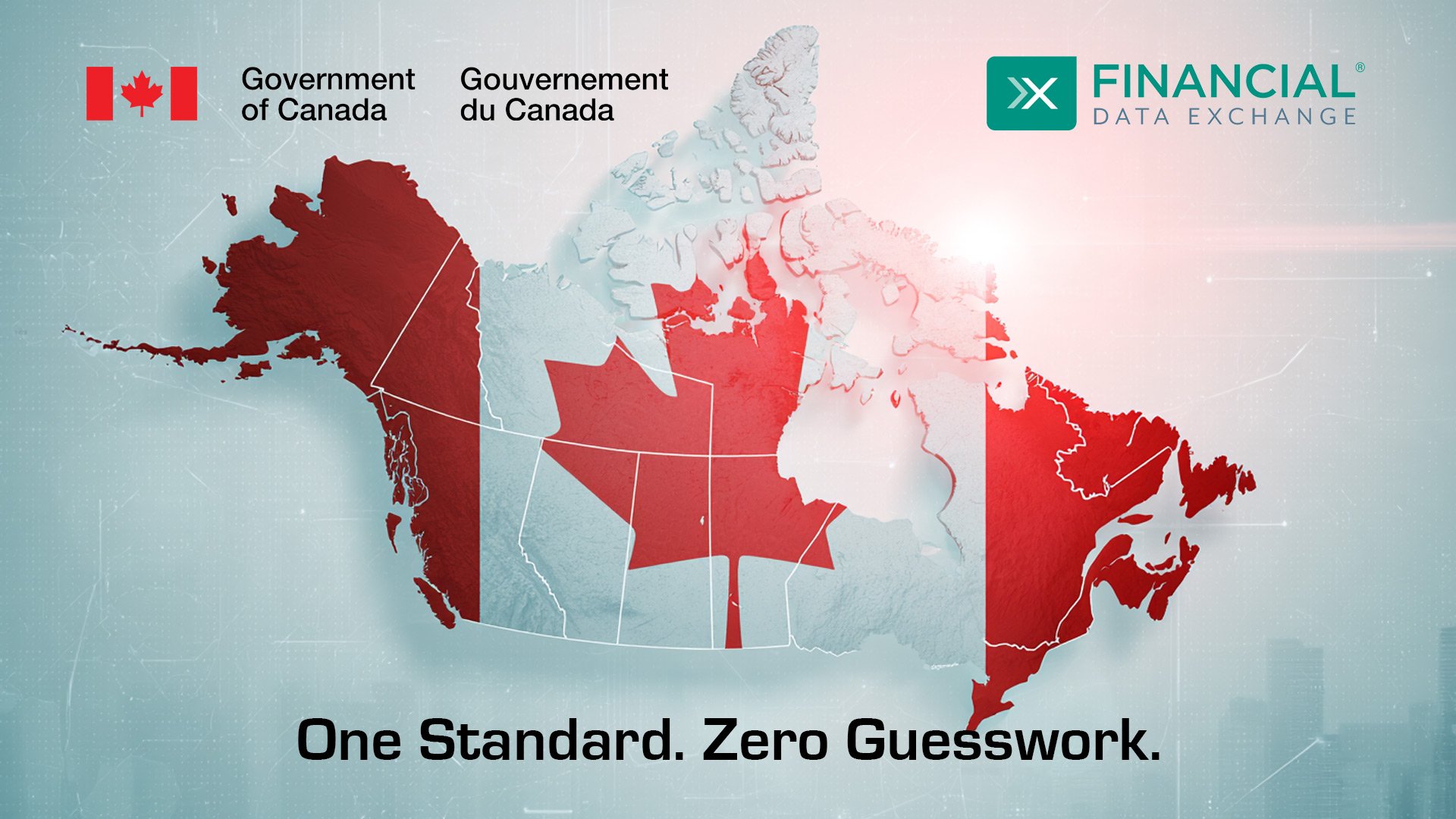
Today marks a defining milestone for Canadian financial services. The Department of Finance Canada officially designated the Financial Data Exchange (FDX) as the official Technical Standards Body under the Consumer-Driven Banking Act.
For years, Canadian Open Banking lived in the realm of policy debates, legislative proposals, and long timelines. Today, the conversation shifts permanently from legislation to operational execution.
Ottawa has officially chosen the universal language for open banking. Here is what that means for banks, credit unions, and fintechs - and why this announcement should make you tune your attention in.
The Big Shift: Moving from Paper to Pipes
Until now, financial institutions and fintechs navigating data sharing in Canada faced a double constraint: build expensive, custom integrations for every partner, or rely on risky, fragile screen-scraping workarounds.
The designation of FDX changes the architecture entirely.
FDX isn’t an untested framework designed from scratch in a boardroom. It is a mature, consensus-driven API specification that already powers over 114 million customer-permissioned connections across North America. By formally selecting FDX, the federal government has handed the financial ecosystem a single, plug-and-play rulebook.
Instead of designing bespoke API formats for every individual partner, financial institutions and fintechs now have a shared technical blueprint. Standardizing on the FDX specification dramatically cuts development overhead, simplifies security compliance, and delivers native cross-border interoperability with the U.S. market - all while giving consumers bank-grade, tokenized control over their data.
A Word From Our CEO
"This designation gives the market the one thing it needed most: technical clarity," says Lewis Poe, CEO of Caspian One Open Data and member of the FDX Board of Directors. "By naming FDX as the official standards body, Canada isn't just catching up to global open banking leaders, we are putting proven, North American-tested infrastructure directly to work. For institutions of all sizes, the question is no longer 'what will the rules be?' It is 'how fast can we deploy direct, secure connections for our customers and members?'"
Why This Matters Right Now (And What Comes Next)
Whether you are a tier-one bank, a regional credit union, or an emerging fintech, this announcement impacts your 2026 roadmap in three direct ways:
Immediate Execution Phase: The "wait and see" period is over. With the official Technical Standards Body locked in, accreditation, API deployment, and core integration plans must move from strategy decks to active engineering.
Built-In North American Interoperability: Because FDX is already the dominant standard across the US and Canada, institutions adopting the standard gain cross-border scaling potential natively, rather than getting trapped in a localized data silo.
Leveling the Playing Field: Small and medium-sized financial institutions no longer need multi-million-dollar custom R&D budgets to participate in consumer-driven banking. Standardized APIs lower the technical barrier to entry for everyone.
Building the Future of Open Data
At Caspian One Open Data, this news isn't a surprise - it’s the exact future we’ve been building for over the past 4 years.
With representation on the FDX Board of Directors and deep operational expertise spanning Canada, the United States, the United Kingdom and Europe, Caspian One Open Data sits at the exact intersection of global open banking strategy and practical technical execution.
We help banks, credit unions, and fintechs deploy enterprise-ready, FDX-compliant data connections rapidly - eliminating multi-year IT bottlenecks so you can focus on building platform advantage, deepening customer relationships, and unlocking embedded finance.
The rails are down. The standard is set. Now, it’s time to build.
Ready to accelerate your FDX compliance and open banking strategy?
Connect with the Caspian One Open Data team today to explore our rapid-deployment ecosystem solutions.
Read more here about FDX and Consumer Driven Banking in Canada.
