From Cash, to Card, to Code: money follows people

Money itself is a story of convenience and people don’t stay loyal to ‘channels’, they think about getting things done, and throughout financial history that means showing up where life happens.
Today, that means digital platforms, online journeys, business tools, and increasingly, AI-driven conversations. Embedded finance is simply the latest expression of a pattern that has been true for decades. People moved, and money found a way to move with them — but the way it could do so depended entirely on behaviour and the technology available at the time. Conceptually, embedded finance is not a modern invention; it is a long-standing evolution that has widened each time technology created new possibilities.
Yet for all this movement, everything originally began from one fixed point: the trusted financial institution. Banks and credit unions were the safest place to store money, which meant people travelled to them. Trust came from the institution; access came from geography. Only as technology progressed did money begin extending outward and embedding itself into the places people lived their daily lives.

From Cash…
The branch wasn’t just a building; it was the earliest form of embedded finance — an expanding network of banks and credit unions embedding themselves directly into main streets, shopping districts, and community centres. Financial access became part of everyday geography.
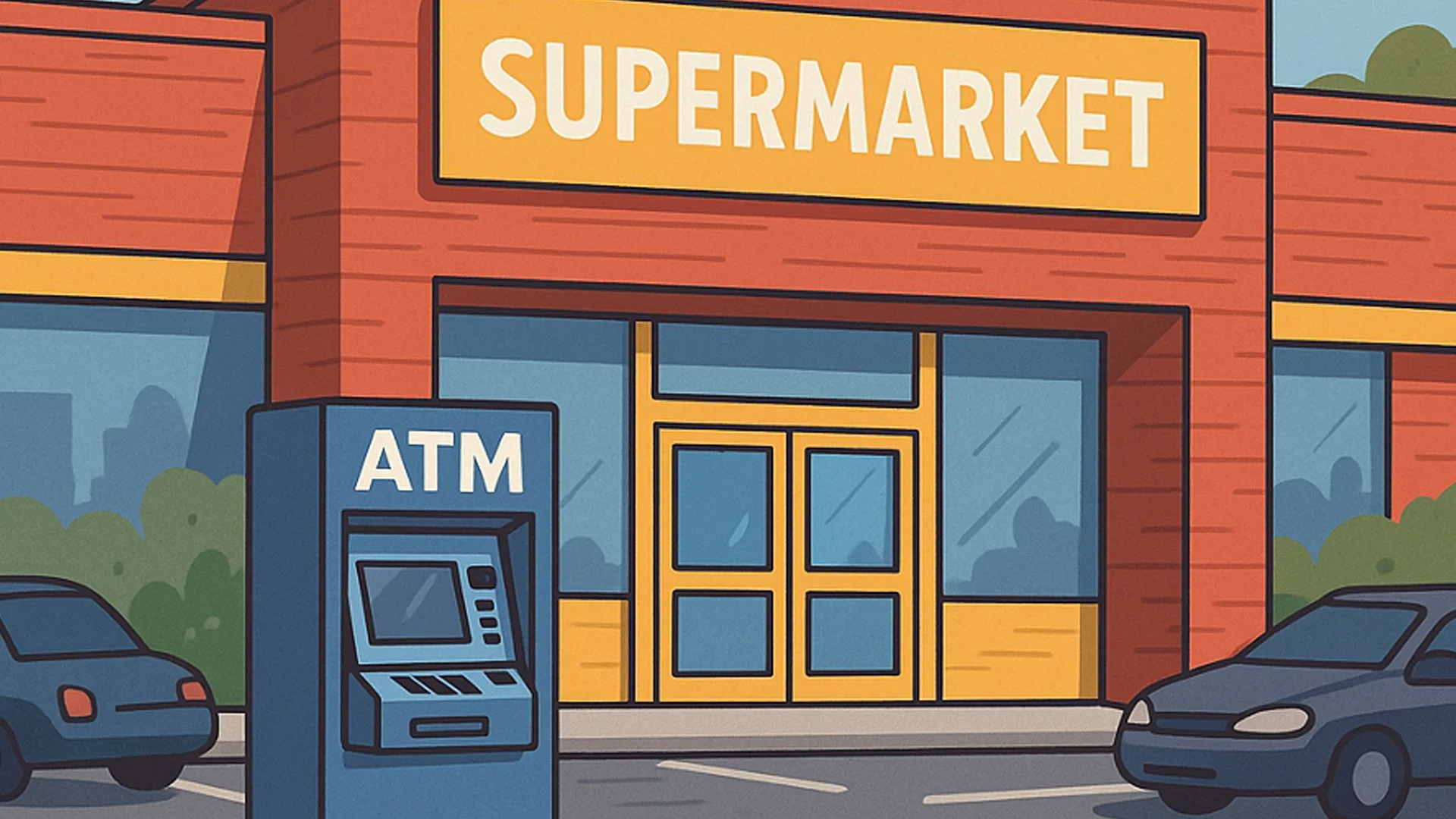
But people still had to visit the bricks-and-mortar branch and speak to a teller to securely withdraw or deposit funds. Then came the Automated Teller Machine (ATM), which transformed reach entirely. Access to cash spread into supermarket car parks, drive-through locations, and main-street corners. No staffing, no closing times, no brand barriers, just trusted around the clock access, embedded into the places people naturally moved.
… to Card…
The ATM didn’t just expand access to cash, it also introduced the technology that would transform payments themselves. To use an ATM customers needed a bank card with a magnetic stripe and a secure Personal Identification Number (PIN). This combination of identity, authentication, and network connectivity meant that customers could be recognized and authorized instantly, without a human teller. This very technology didn’t stop at the metal box, it paved the way for the card infrastructure needed, embedded payments at the point of sale.
What began as a way to access cash quickly became a way to spend without cash at all. The card moved from the ATM slot to the shop counter, and those payments followed people wherever they bought goods, filled their tanks, or paid for a service.
… to Code…
The rise of the World Wide Web changed how people searched, compared, and completed tasks – financial institutions naturally followed this behavioural change.
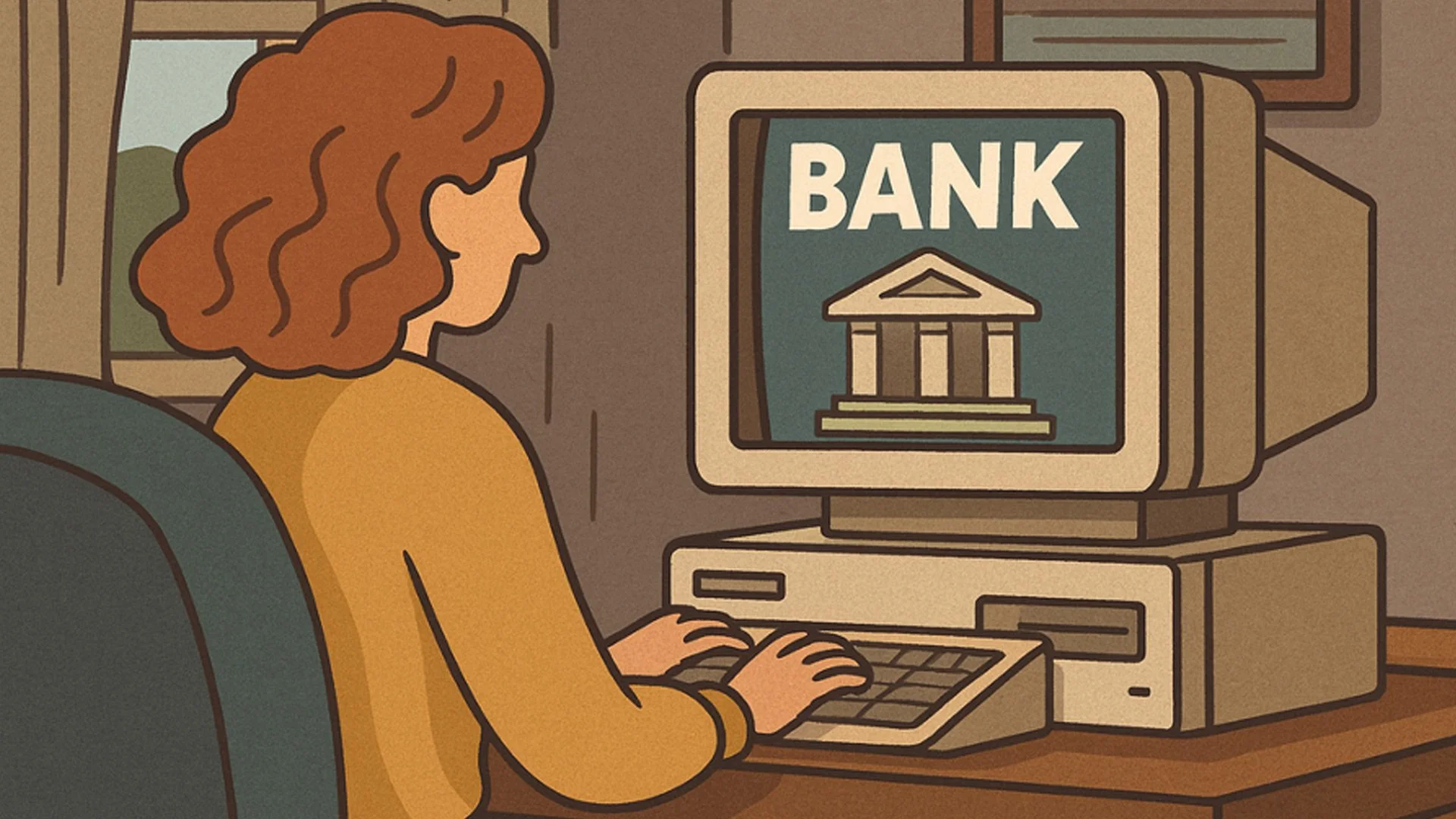
Services that once required a phone call, a branch visit, or statements in the mail, moved to a browser: product information, account information, applications, and support all moved into people’s living rooms. The branch didn’t disappear — it migrated into the home, and later, their pockets, available on demand, 24/7.
Finance shifted from physical access to digital access, powered by code rather than geography. Yet the financial institution remained the anchor – still the place the customers returned to, just through a screen rather than a branch door.
This shift to screen, powered what came next.
… to Ecommerce…
As purchases shifted from the shop till to the online checkout, the embedded finance we recognize today started to take shape. Because ecommerce didn’t just embed the payment, it embedded instant financial decisions.
Buy Now Pay Later (BNPL) brought credit into the very moment of purchase, giving merchants higher conversion and lower friction. Credit became a feature of the transaction itself. Big Tech moved fast, embedding payments and credit inside their own platforms. They weren’t just hosting commerce – they were offering financial services.
Ecommerce didn’t just digitize shopping. It created Embedded Finance 1.0: payments and credit delivered seamlessly inside the platform; at the exact moment of need.

… to Conversations…
Digital services are evolving at an extraordinary speed. Increasingly, the actions that once happened on websites or apps are moving into a new environment entirely — inside conversations.
As generative AI matured, commerce naturally ‘entered the chat’ and now Agentic AI is keeping it there. From conversation to conversion – what began as natural-language answers, has become natural-language decision-making. Financial choices that once required checking multiple tabs, comparing offers, or navigating an app can now be expressed in a single sentence.
“Find me the best deal for…”
“Compare these options…”
And increasingly:
“Do it for me.”
Purchases, payments, bookings, applications, subscriptions, and even complex financial workflows will be initiated through simple, conversational prompts.
Money has now followed people into their conversations – the most natural interface of all.
… and this is the moment everything changes for financial institutions.
Embedded finance is not new. Money has always followed people. What is new is the speed and scale that modern technology makes possible.
For decades, financial access could only evolve as fast as the tools allowed – and those limits kept institutions at the centre. But now, the very technology that once restricted financial institutions to passively provide data in open banking, has become the technology that lets them compete and expand in this new frontier.
APIs change everything.
In recent years, banks and credit unions adopted API frameworks driven by regulation, market demand, or competitive pressure. Open banking heralded a new era of competition in financial services — but it came at a cost. Incumbent institutions were required to fund third-party access to their customers’ data while remaining in minimum-viable compliance roles that delivered little direct upside. What was positioned as innovation for the market landed as a costly, one-sided burden for the institutions themselves.
But to understand why APIs now matter, we need to look at how we got here.
Just as:
Cash travelled further when ATMs stepped onto the street
Cards slipped into the point of sale and lived at the point of need
Code carried the branch to the browser, freeing it from place
then code enabled Carts to roll online as shopping left the streets,
and conversations to become the new checkout as AI “enters the chat”
Each shift widened the path for money to follow people. APIs are now enable financial institutions to catch up.
What started out as a compliance obligation has now become the most powerful distribution breakthrough since the arrival of the ATM. The most innovative financial institutions saw that APIs are far more than mere data pipelines — and their potential goes beyond simply shifting the banks' role from data providers to data consumers. The crucial advancement is that APIs enable financial institutions to repackage their trusted services as modular, embeddable building blocks, ready to be seamlessly integrated wherever financial activity occurs.
APIs allow financial institutions to project their trusted assets outward with no geographical limits — not as destinations customers must return to, but as services that can be embedded directly into the places people already live, work, transact, and make decisions.
This is no longer code powering online banking. This is code powering the branch everywhere.
Financial institutions are not being displaced. They are being freed from channel-bound delivery and can now meet people wherever financial intent appears. For the first time, they can compete with FinTech and Big Tech on their own terms — as the long-standing trusted, regulated stewards of money with a credibility that no digital platform can replicate.
Every sector of the economy has financial needs — universities, payroll systems, business platforms, dealerships, ecommerce, community services and more. Open data finally provides the mechanism to link these needs with the right financial institution. Caspian One Open Data is the infrastructure that makes that cross-sector connection possible.

In our previous posts, we introduced Jayne and the Georges to bring these ideas to life –practical scenarios that show how open data and embedded finance play out in everyday contexts:
Jayne’s Valentine’s Day Lifeline
Open data fuelling SME growth
George Jr. Becomes the Next Embedded Finance Champion
Financial services embedded directly into his business operations
Putting Embedded Finance at George Sr.’s Point of Need
Embedded finance in physical places, financing delivered at the dealership, at the exact moment of decision.
Those stories illustrate far more than the narrow scope of Embedded Finance 1.0, such as the BNPL button (valuable as it may be). Rather, they show the full breadth of what embedded finance becomes when it moves beyond the checkout—into life, work, services, decisions, and physical places.
Wrapping up, it’s worth remembering one of the clearest lessons in modern business:
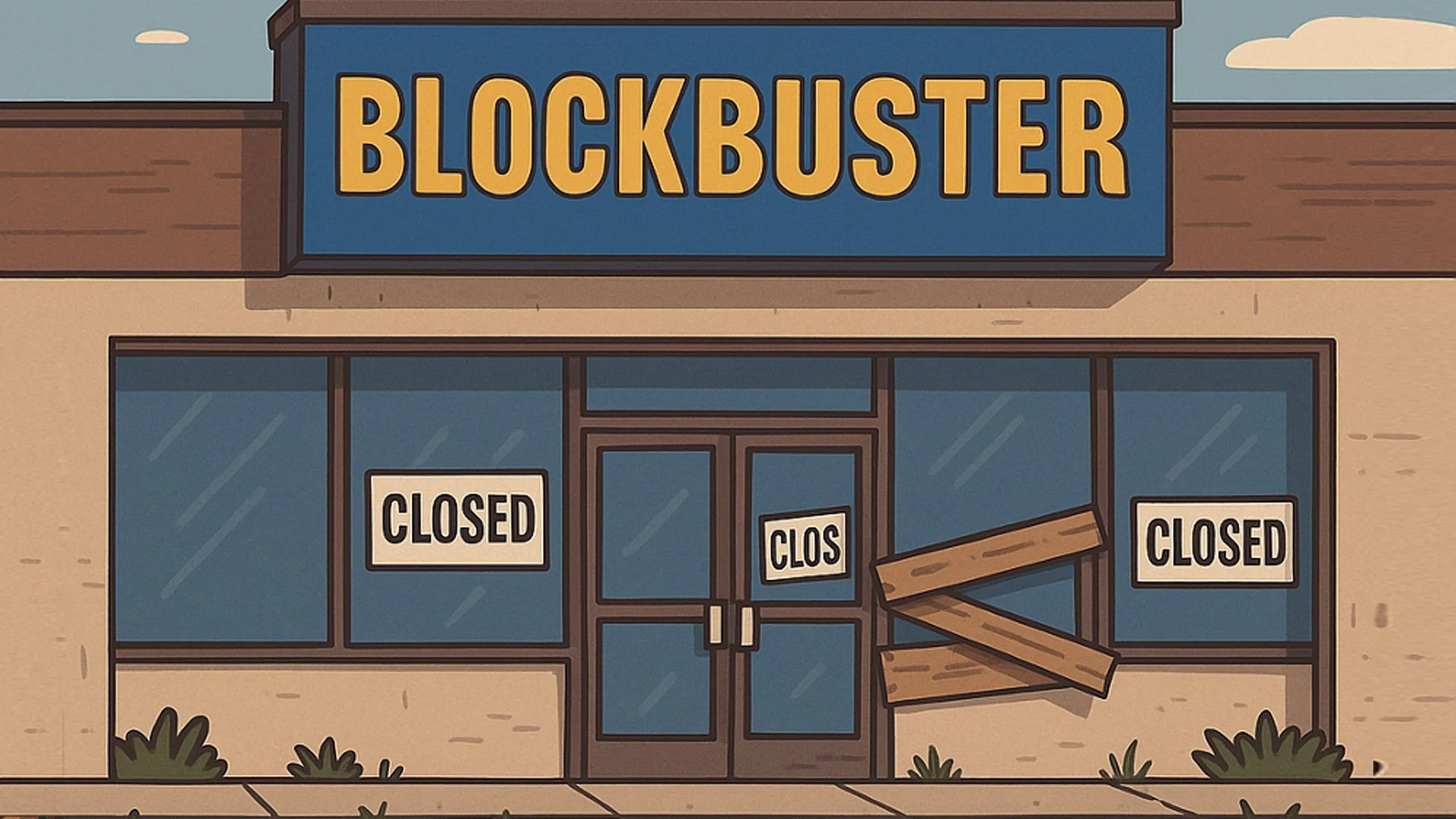
Blockbuster didn’t fail because people stopped watching films.
They failed because the distribution pattern changed – and they didn’t.
Netflix didn’t win with better content.
They won by shifting where people accessed content.
The same shift is happening in finance now. People will never stop needing financial services. They will simply change where they expect to access them. Financial institutions that follow this shift will expand their reach and relevance. Those that don’t will face the same fate as Blockbuster, not because the service became obsolete, but because the distribution pattern moved on.
We ensures Financial Institutions don’t miss this moment.
We give them the infrastructure, the connectivity, and the technological foundation to step confidently into the new era, meeting people wherever money, and their decisions, now flow.
We want to hear from you. Let's discuss how we can accelerate your strategy.